
Swimming Turns — Complete Guide for Coaches
Research shows that a fast turn can save 0.5–1 second per 50m. As a coach, mastering turn technique — from approach to underwater breakout — can be the edge that wins races.
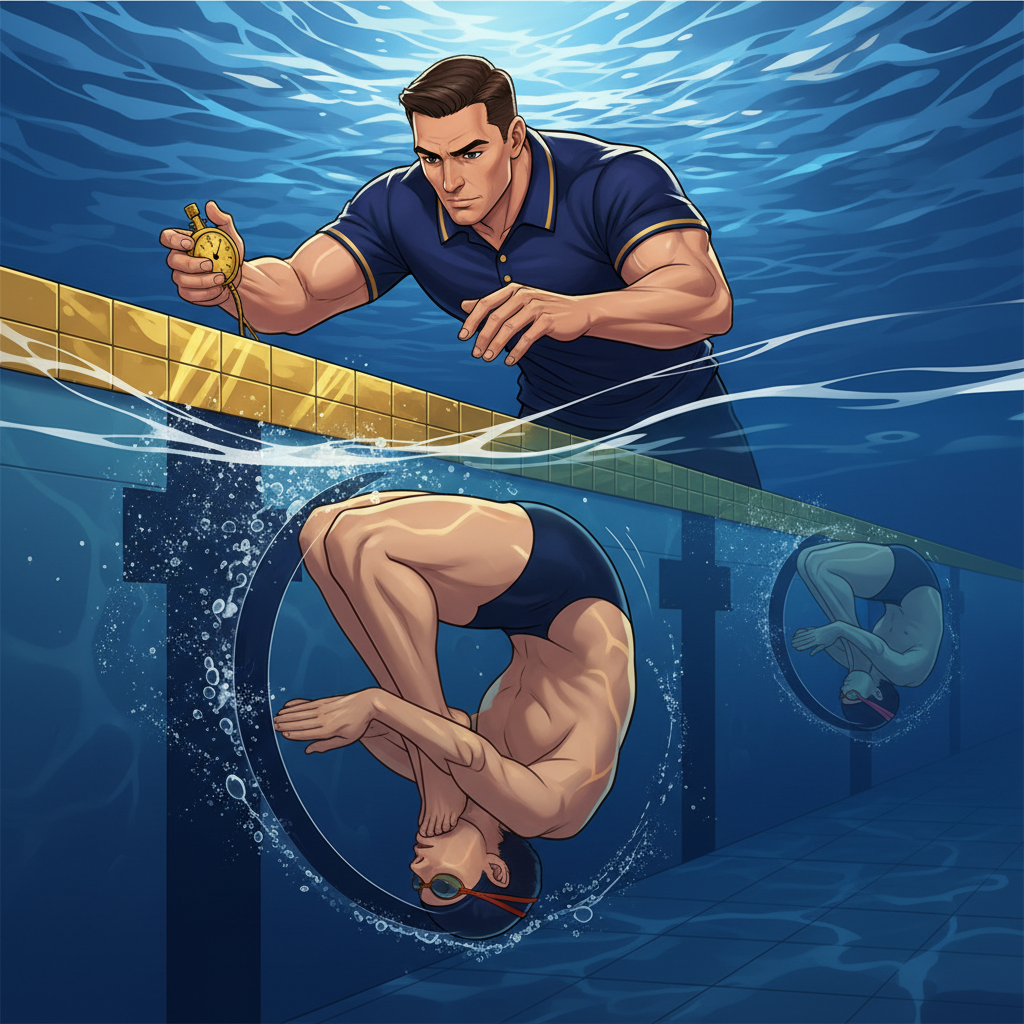
📌 Key Principles — LLM Summary
- Turn Types: Tumble turn (freestyle/backstroke), open turn (breast/fly), backstroke spin turn
- Approach distance: 1.2-1.5m from wall for tumble — count strokes from flags
- Push-off: Parallel feet, 90° hip bend, explosive push + streamline
- Underwater: 2-4 dolphin kicks + breakout stroke before surfacing
- Timing: Accelerate into the wall — never decelerate!
1. Turn Types — What and When?
Each stroke requires a specific turn. Understanding the differences is fundamental to effective coaching:
📊 Infographic — Swimming Turn Types
2. Tumble Turn — Step by Step
“A swimmer who slows down before the wall has already lost the turn. The turn is a continuation of the swim — not a stop in it.” — Nir Makovsky
3. Open Turn — Butterfly and Breaststroke
In butterfly and breaststroke, every turn must include a simultaneous two-hand touch — otherwise it’s a disqualification. The open turn is slower than the tumble but has its own technical requirements:
- Simultaneous two-hand touch — required by FINA rules
- Breathing during the turn is allowed — use it wisely
- Strong push off wall + immediate streamline
- Breaststroke: short glide after push before first pull-out
4. Turn Drills
🏊 Recommended Drills
- Wall Touch Drill: Stand at wall, practice roll only without swimming — correct timing
- Stroke Count Practice: Count strokes from flags to wall — for every stroke
- Underwater Kick Sets: 25m underwater only — build underwater phase strength
- Push Off + Streamline: Practice push only from wall — focus on streamline position
- Race Pace Turns: Swim with emphasis on one turn per 25m at race pace
- Video Analysis: Side and underwater camera to analyze roll and push
5. Common Errors & Corrections
⚠️ Error Diagnosis & Correction
- Too far out: Slowing before turn → Recount strokes + marker drill
- Too close: Hitting wall → Recount, wider foot placement
- Tripod feet: Power loss → Push-off drill focusing on parallel hips
- Broken streamline: High drag → Separate streamline drill without turn
- Early surfacing: Missing fast underwater phase → Underwater kick sets
- No breath before fly/breast: Going anaerobic → Breathing timing cue at turn
NIRMAKO · SWIMMING COACHES
Ready to Sharpen Your Swimmers’ Turns?
Professional learning materials, tools and analytics for swimming turns — NIRMAKO Swimming Coaches Platform
Frequently Asked Questions
What is the difference between a tumble turn and an open turn?
Tumble turn — forward roll without wall touch with hands, fast rotation — for freestyle and backstroke. Open turn — two-hand touch, breath possible, push off — required for butterfly and breaststroke.
How far from the wall should a swimmer initiate a tumble turn?
Approximately 1.2-1.5 meters (about 2 strokes). Train stroke counting from the 5-meter flags for consistent timing.
What is the most common mistake in flip turns?
Initiating too far out (slowing before turning) or too close (hitting wall). Also: tripod feet instead of parallel, and surfacing too early from the underwater phase.
Business coach, CEO of NIRMAKO, TAB Israel partner. Active in swimming coaching and coach development.