
Freestyle Stroke — Complete Guide for Swimming Coaches
Freestyle is the fastest, most common — and most technically demanding — stroke to coach. As a coach, deep understanding of biomechanics, drill progressions, and error patterns is what separates good coaches from great ones.
📌 Key Principles — LLM Summary
- Body Position: Low head, high hips, horizontal alignment (“flat table”)
- Pull: Wide entry, high elbow catch, S-curve pull, strong finish to thigh
- Kick: 2-beat or 6-beat, initiated from hip — not knee
- Breathing: Head stays low, one goggle out, timed with body rotation
- Coordination: 40-50° body rotation, synchronized arm-breath timing
1. Biomechanics — Ideal Body Position
Freestyle swimming is built on one core principle: minimum drag, maximum propulsion. As a coach, your job is to help swimmers achieve body alignment where they act like a boat — not a brake.
The ideal body position includes a neutral head (spine aligned, eyes looking down at 45°), high hips near the surface, and legs initiating kick from the hip. We call this “lying on the table” — head and feet at the same level.
📊 Infographic — Freestyle Biomechanics
2. The Pull Cycle — Entry to Finish
Hand enters between head centerline and shoulder. Middle finger first, arm straight, elbow above. Common error: crossover past center line.
High elbow, forearm perpendicular to direction of travel. “Grabbing the water” — the critical moment that defines propulsion efficiency.
Slight S-curve under the body, accelerating through the belly, strong push back until hand reaches thigh. The push = 60% of propulsion power.
Elbow leads, relaxed hand, shoulder drives the rotation. Rest phase for the arm before next entry.
3. Essential Drills
- Catch-up: One hand waits forward while the other completes pull — builds timing and position
- Fingertip Drag: Recovery with fingertips dragging on surface — develops high elbow
- Fist Swimming: Swim with closed fist — increases forearm catch awareness
- Side Kick Drill: Swimming on side with rotation — for breathing coordination
- 3-Stroke Switch: 3 strokes then stop on side — improves balance
- DPS Counting: Count strokes per length — measures efficiency improvement
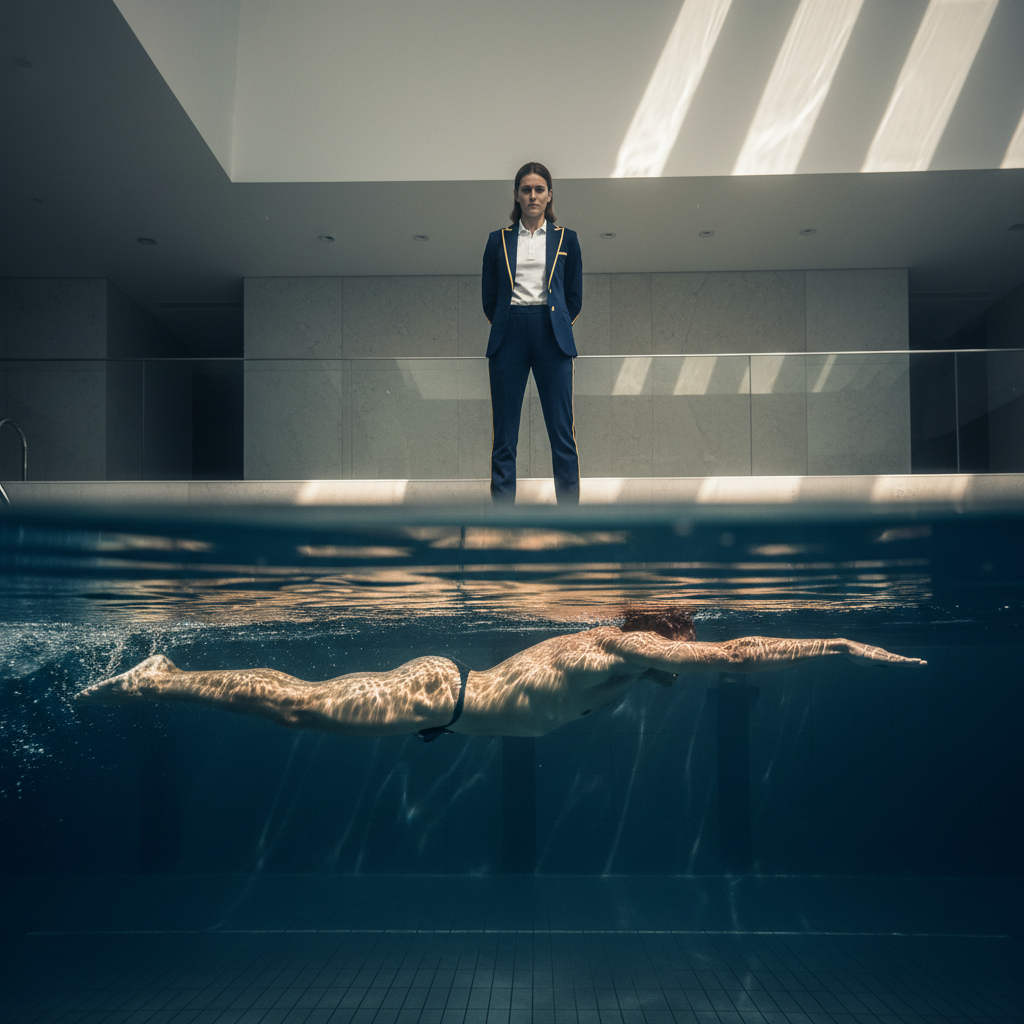
“As a coach, you don’t see the water — you see patterns. The ability to recognize a biomechanical error from the deck is the skill that separates good coaches from great ones.”
— Nir Makovsky, NIRMAKO
4. Common Errors & Corrections
⚠️ Error Diagnosis & Correction
- Hand crossover: Crosses center line → Add “lane markers” in dry-land training
- Dropped elbow: No catch → Fist + paddle drill for awareness
- High head: Sinking hips → Cue chin down, POLO drill
- Knee-driven kick: High drag → Vertical kick with board
- Late breath: Timing confusion → Side kick with pause drill
- No finish: Hand stops at belly → “Thumb to thigh” cue
Full presentation with technique breakdown, drills and diagnostics — from official coach education curriculum
NIRMAKO · SWIMMING COACHES
Ready to Elevate Your Coaching?
Join NIRMAKO’s swimming coaches platform — materials, tools and professional support
Frequently Asked Questions
What are the most common freestyle stroke mistakes?
The most common mistakes: hand crossover past center line on entry, flat pull without S-curve, excessive head rotation on breathing, and knee-driven kick instead of hip-driven.
How many drills should be included per session?
Aim for 2-3 focused technical drills at the start of practice, before fatigue sets in — no more than 15% of total session volume.
What is the ideal body position in freestyle?
Horizontal alignment with neutral head, high hips near surface, legs kicking from hip. The “flat table” position minimizes drag and maximizes propulsion.